


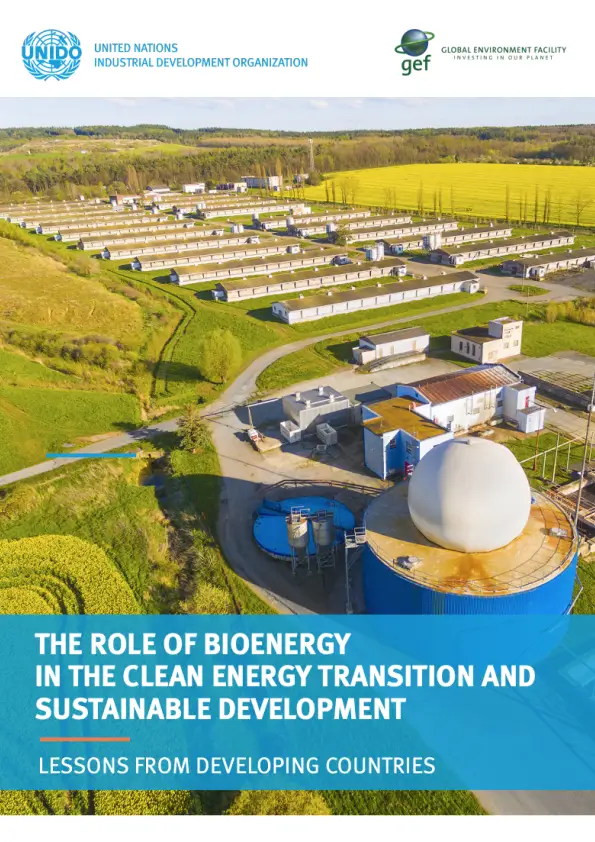
Bioenergy is emerging as one of the most promising renewable energy solutions for developing economies. According to the report “The Role of Bioenergy in the Clean Energy Transition and Sustainable Development – Lessons from Developing Countries”, when managed sustainably, bioenergy can reduce dependence on fossil fuels, lower greenhouse gas emissions, and stimulate socio-economic growth.
1. Understanding Bioenergy and Its Global Importance
Bioenergy is derived from organic biological materials such as agricultural waste, forestry residues, and food-processing by-products. The report highlights its relevance in the transition to clean energy systems and its strong connection to sustainable development goals (SDGs).
2. Economic & Environmental Benefits of Bioenergy
Sustainable bioenergy production contributes to:
- Reducing reliance on imported fossil fuels
- Increasing energy security
- Creating rural employment
- Decreasing deforestation & carbon emissions
- Supporting climate-smart development
When implemented correctly, bioenergy becomes both an economic engine and an environmental solution.
3. Bioenergy in Practice: Case Studies from Developing Countries
The publication presents 15 real-world examples across various regions. These cases show how renewable energy can emerge from waste, agriculture, and natural resources.
3.1 Solid Biomass Projects
Examples include:
- Production of wood and black pellets in Portugal
- Olive-oil industry biomass utilization in Albania
- Charcoal briquette production in Uganda
These projects demonstrate reduced deforestation, job creation, and cleaner energy production.
3.2 Biogas Production from Agricultural & Industrial Waste
Biogas initiatives highlight the circular economy concept, where waste is converted into clean power. Notable case studies include:
- Biogas from avocado waste in Kenya
- Electricity generation from food-industry residues in Brazil
- Grid-connected biogas energy from crop waste in Kenya
These systems help lower fossil fuel use, reduce pollution, and enhance energy reliability.
3.3 Liquid Biofuels – Ethanol for Clean Energy
Highlighted clean-cooking and ethanol-processing projects demonstrate scalable solutions for household energy sustainability:
- Bioethanol cookstove program in Tanzania
- Cassava-based ethanol production in Thailand
- Micro-distillery ethanol project in Ethiopia
Bioethanol offers an affordable and smoke-free alternative to traditional fuels like wood and charcoal.
4. Key Factors for Successful Bioenergy Implementation
For large-scale adoption, the report identifies essential considerations:
| Success Element | Importance |
|---|---|
| Reliable feedstock supply | Ensures continuous energy production |
| Proven technology | Reduces operational risk |
| Investment & financing | Enables scalability and cost efficiency |
| Skilled workforce & training | Sustains system performance long-term |
| Supportive policy framework | Encourages adoption & private-sector investment |
With these factors aligned, bioenergy can expand rapidly across developing nations and beyond.
5. Conclusion: Bioenergy as a Driver of a Sustainable Future
The report concludes that bioenergy holds massive untapped potential. With proper project planning, technology transfer, and supportive policies, developing countries can transform agricultural waste into scalable clean energy solutions—directly contributing to climate goals and improving quality of life.
📄 Read the Full Article
If you would like to read the complete version of the article, click here.



No comment