


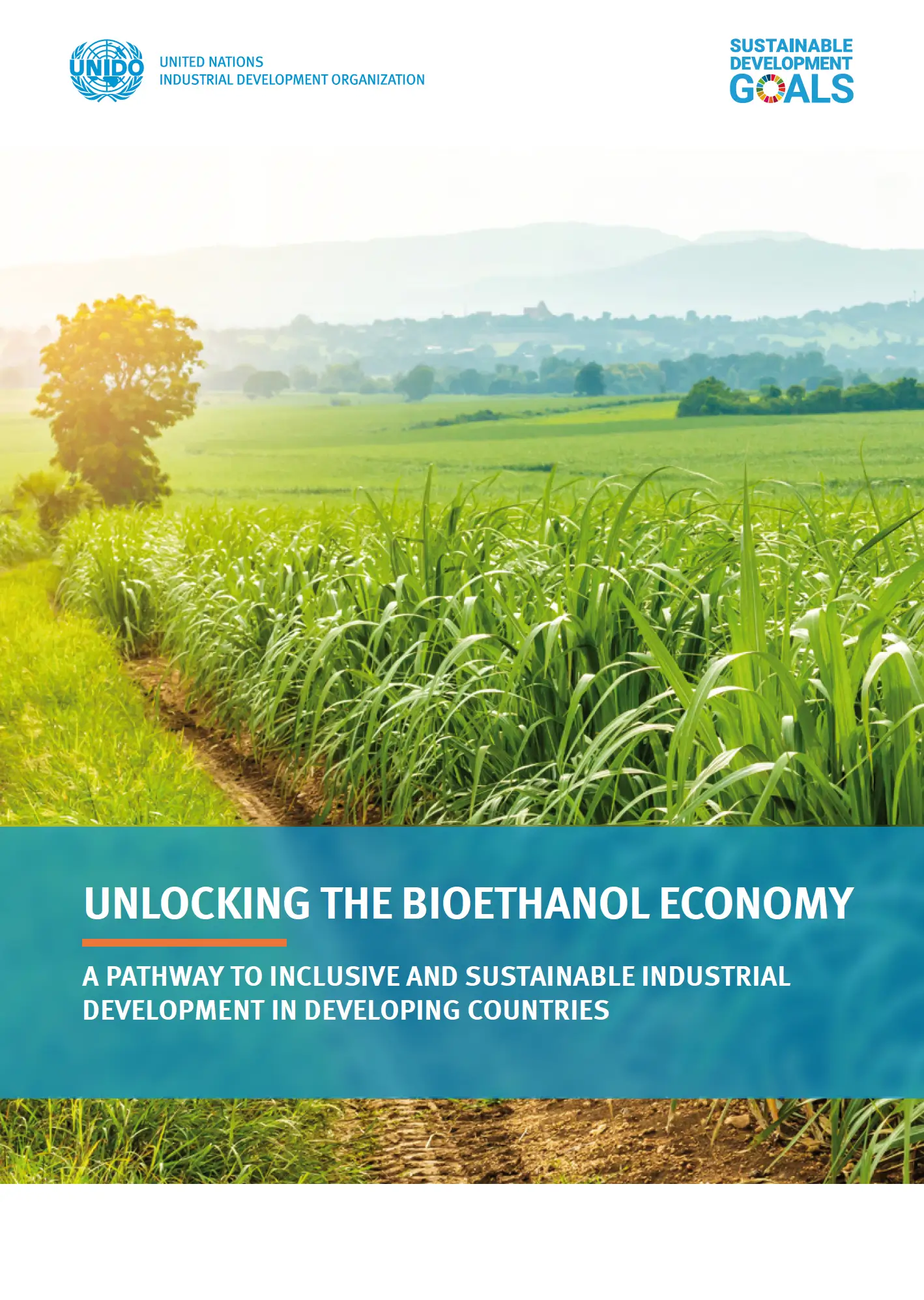
A Pathway to Sustainable Industrial Growth in Developing Countries
Bioethanol is rapidly emerging as one of the most transformative renewable energy solutions for developing economies. As a clean-burning fuel derived from agricultural crops such as sugarcane, maize, and cassava, ethanol offers a dual advantage: supporting climate action while driving inclusive socio-economic development. This publication highlights how countries can build a scalable bioethanol market that improves public health, strengthens energy security, and fuels industrial growth.
1. Why Bioethanol Matters for the Future of Energy
Bioethanol provides a cleaner alternative to fossil fuels and traditional biomass. When used for transportation or cooking, it significantly reduces greenhouse gas emissions and indoor air pollution. Countries adopting ethanol-based energy models benefit from higher energy independence, improved rural incomes, and job creation within agriculture and industry.
2. Socio-Economic & Environmental Benefits
The bioethanol value chain—from crop production to refining and fuel use—creates new economic opportunities, particularly for rural areas. It supports SDGs such as:
- SDG 1 & 8: Increased employment and poverty reduction
- SDG 3 & 7: Health improvement through clean cooking solutions
- SDG 9: Growth of industrial capacity and innovation
- SDG 13: Reduction in CO₂ emissions and climate impact
By replacing wood and charcoal used for household cooking, ethanol decreases indoor smoke exposure and helps preserve forests and biodiversity.
3. Bioethanol for Clean Transportation
Many countries now blend ethanol with gasoline to lower emissions and reduce fuel import dependency. Even low-level blends such as E5 or E10 deliver measurable climate benefits. For nations with high vehicle growth, ethanol integration represents a realistic pathway toward NDC achievement and long-term decarbonization of the transport sector.
4. Ethanol as a Clean Cooking Fuel
Over 2.6 billion people still lack access to clean cooking solutions. Ethanol stoves provide a smoke-free, safe, and scalable alternative to traditional biomass burning. Transition to ethanol reduces health risks associated with indoor air pollution—especially for women and children—and frees household time previously spent on fuel collection.
5. Agricultural Value Chain Development
Establishing ethanol industries stimulates agricultural productivity through:
- Expansion of feedstock cultivation (sugarcane, maize, cassava)
- Increased income for smallholder farmers
- By-product utilization such as molasses and bagasse
- Growth of SMEs within processing, logistics, and fuel distribution
Food and fuel production can coexist when supported by proper land zoning, sustainable farming practices, and integrated planning.
6. Country Insights & Successful Model Examples
Case studies referenced throughout the publication demonstrate scalable ethanol integration:
- Brazil – world leader in ethanol fuel systems and flexible-fuel vehicles
- India – large market transitioning toward cleaner fuels
- Thailand & Mozambique – growing policy frameworks enabling market expansion
These models prove that with the right regulation, ethanol can support both domestic energy demand and export-driven growth.
7. Challenges & Roadmap for Implementation
To unlock the full potential of the ethanol economy, countries must address:
| Requirement | Importance |
|---|---|
| Policy & regulatory stability | Encourages investment |
| Secure financing models | Enables industry scaling |
| Sustainable land management | Prevents ecological damage |
| Local value-chain integration | Ensures equitable benefit distribution |
Government incentives—such as fuel blending mandates and stove adoption programs—play a key role in accelerating market growth.
📄 Download Full Article
If you would like to read the complete version of this article, click here.



No comment